If you’ve ever delved into my fiction, you’ll notice a recurring theme: all of my stories are firmly rooted in the first half of the 20th century. This isn’t a random choice or a mere stylistic quirk—it’s a deliberate decision driven by my belief that the modern age has lost its sense of mystery, a quality essential to crafting truly atmospheric horror. Today’s horror often leans heavily on blood, guts, and jump scares, but I argue that this shift reflects a deeper cultural change: people simply aren’t as afraid of the unknown as they were 100 years ago.
In the early 20th century, the world was a vastly different place. Technology was advancing, but it hadn’t yet permeated every aspect of life. Electricity was still a novelty in many regions, and vast swaths of the globe remained unexplored or poorly understood. This was an era where the unknown loomed large—whether it was the shadowy depths of an uncharted forest, the eerie flicker of a gas lamp, or the unsettling tales of folklore passed down through generations. People lived in a world where mystery was tangible, where the boundaries between the natural and the supernatural felt porous. This pervasive uncertainty made the early 20th century a perfect backdrop for horror, as fear of the unknown could be woven into the very fabric of a story’s atmosphere.
Consider the classic horror of that era, like the Universal Monster films or the chilling tales of H.P. Lovecraft. These stories didn’t need to rely on graphic violence to terrify. Instead, they thrived on suggestion and dread—Dracula’s shadow creeping up a staircase, or the unseen cosmic horrors lurking just beyond human comprehension in Lovecraft’s mythos. The audience’s imagination filled in the gaps, and that’s where the true terror lay. A creaking floorboard in a darkened house could evoke more fear than a gallon of fake blood ever could, because it hinted at something unknowable, something just out of sight.
Contrast that with modern horror, which often prioritizes visceral shocks over atmosphere. In today’s world, the unknown has been systematically dismantled. Science and technology have mapped the globe, illuminated the dark corners, and explained away many of the mysteries that once haunted us. We have instant access to information at our fingertips—ghostly apparitions can be debunked with a quick Google search, and GPS ensures we’re never truly lost. This erosion of mystery has forced modern horror to pivot toward more immediate, physical forms of fear: gore, violence, and jump scares. While these can be effective, they often lack the lingering unease that comes from not knowing what lurks in the shadows.
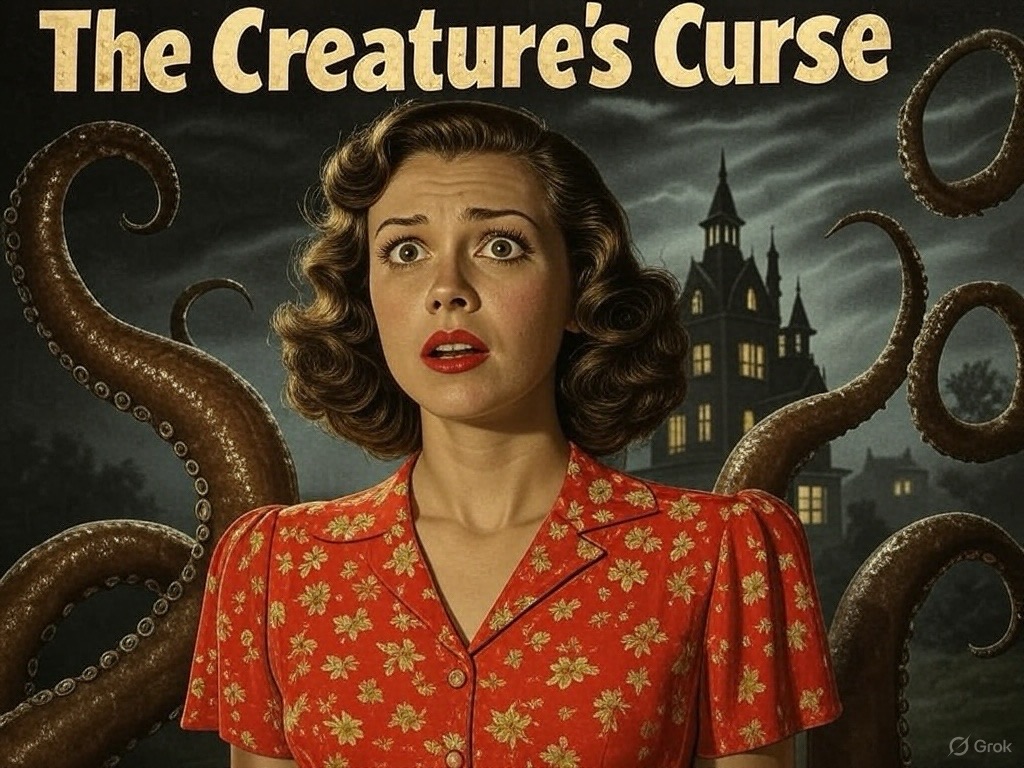
This is why I set my stories in the early 20th century. I want to recapture that sense of wonder and dread, where the unknown was a palpable force. My characters live in a world where a foggy night can conceal unspeakable horrors, where a letter from a distant relative might hint at a family curse, and where eldritch tentacles could slither from the darkness without warning. By immersing readers in this era, I aim to rekindle the primal fear of the unseen, proving that true horror doesn’t need blood and guts—it needs mystery.
In a world that’s lost its shadows, I write to bring them back, one eerie tale at a time.
 Fantastic Tales